
 Image 1 of 2
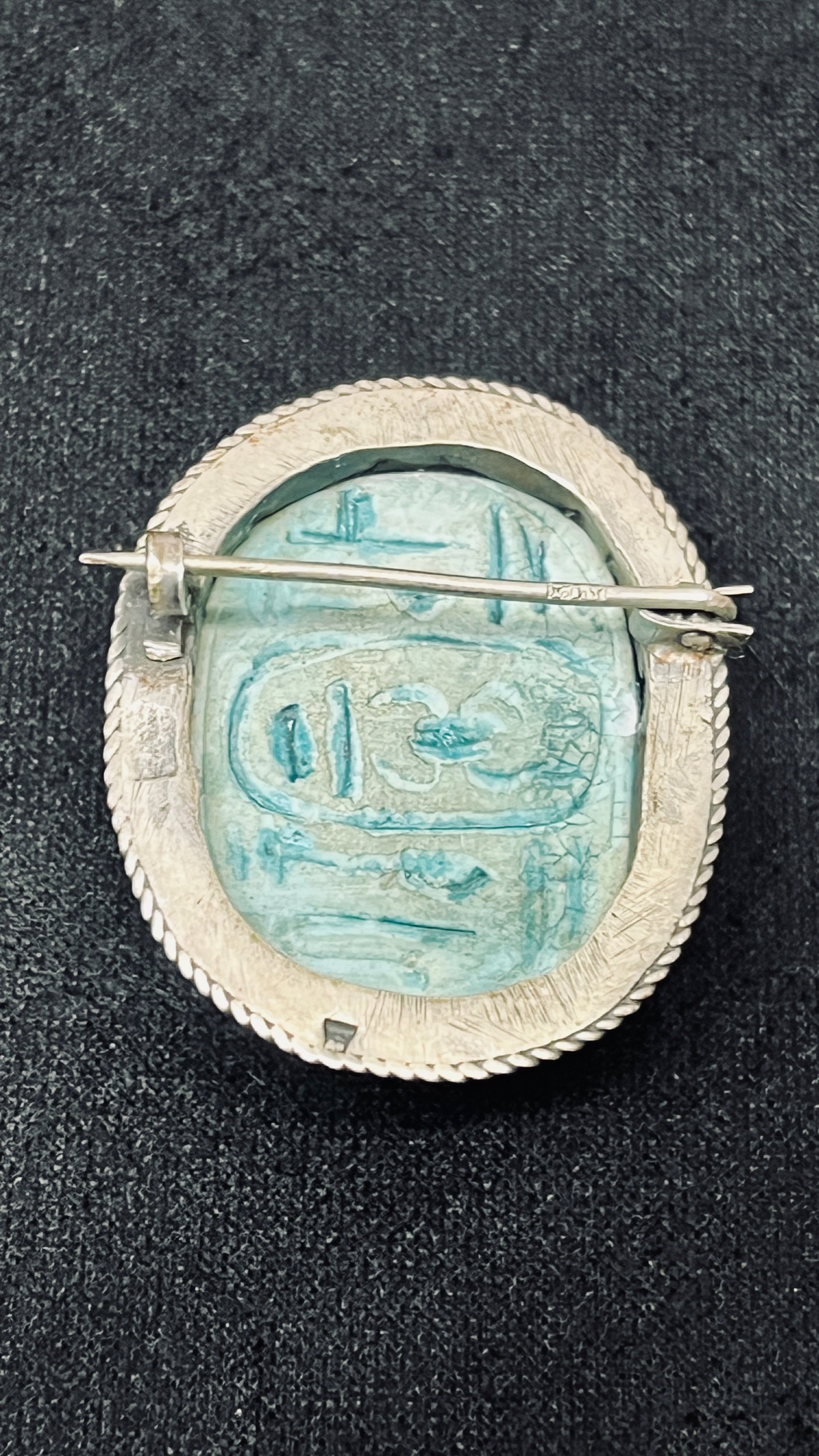 Image 2 of 2
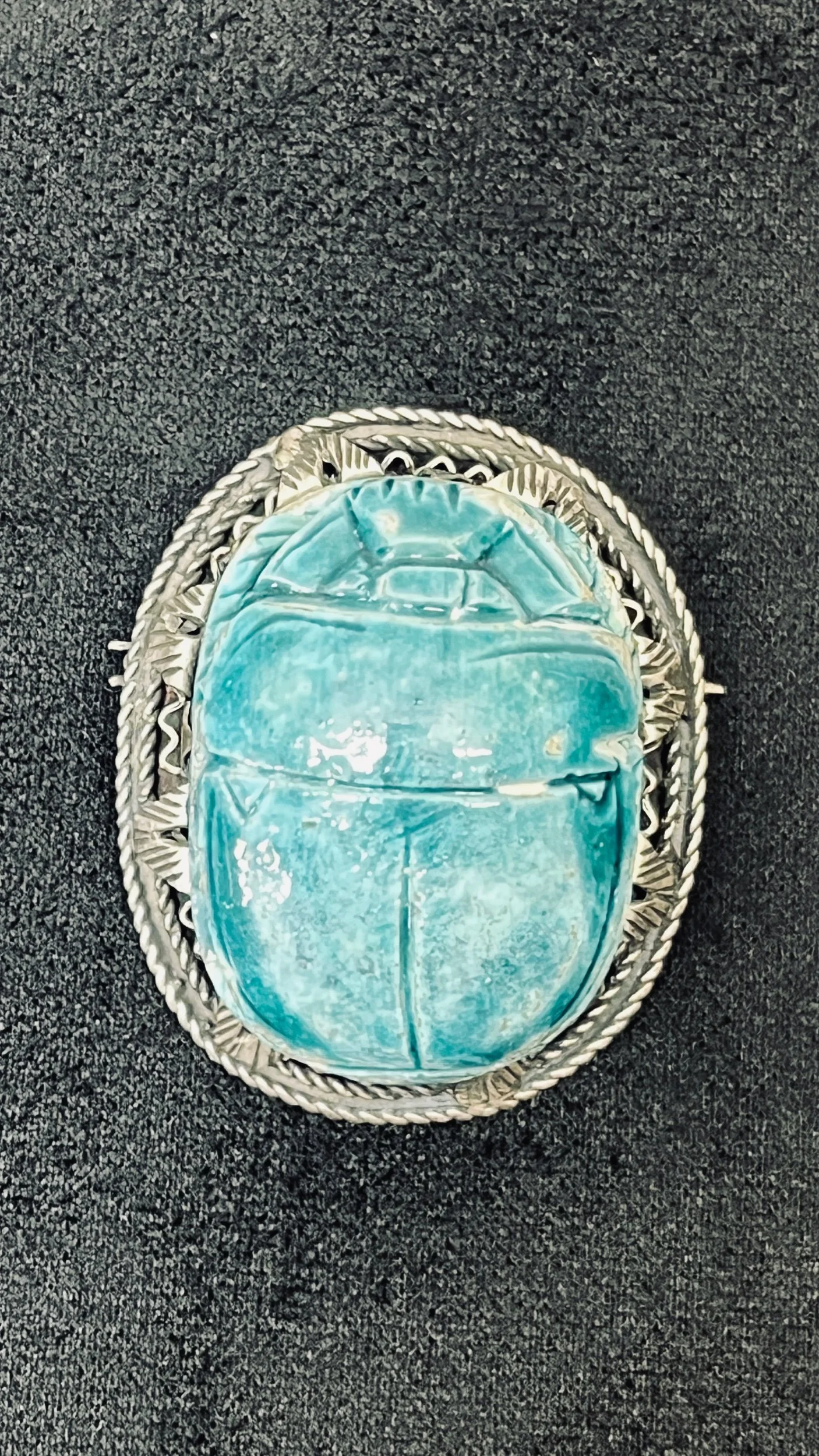
Egyptian Revival Glazed Steatite Scarab set in Sterling Brooch. Signed.
Tested Sterling Silver
In its raw state steatite (soapstone) is soft and easy to carve. When it is fired it converts into enstatite. Enstatite has a hardness of Mohs 5.5 making it durable as granite.
Glazing was achieved either by burying the object in a glazing medium during firing (cementation), or by glaze applied to the surface and fired. These glazes would be similar to Egyptian faience made from powdered quartz and copper (the blue/green colour).
“Faience”, a misnomer, broadly encompasses finely glazed beads and amulets found in Egypt as early as 4000 BC. Amulets were also created with faience paste pressed into molds.
In ancient Egypt the scarab represents the cycle of life, death and rebirth. It was a symbol of immortality, resurrection, transformation, protection, and was often used in funerary art.
Egyptian Revival Glazed Steatite Scarab set in Sterling Brooch. Signed.
Tested Sterling Silver
In its raw state steatite (soapstone) is soft and easy to carve. When it is fired it converts into enstatite. Enstatite has a hardness of Mohs 5.5 making it durable as granite.
Glazing was achieved either by burying the object in a glazing medium during firing (cementation), or by glaze applied to the surface and fired. These glazes would be similar to Egyptian faience made from powdered quartz and copper (the blue/green colour).
“Faience”, a misnomer, broadly encompasses finely glazed beads and amulets found in Egypt as early as 4000 BC. Amulets were also created with faience paste pressed into molds.
In ancient Egypt the scarab represents the cycle of life, death and rebirth. It was a symbol of immortality, resurrection, transformation, protection, and was often used in funerary art.